
Rebozo massage andclosing of the bones
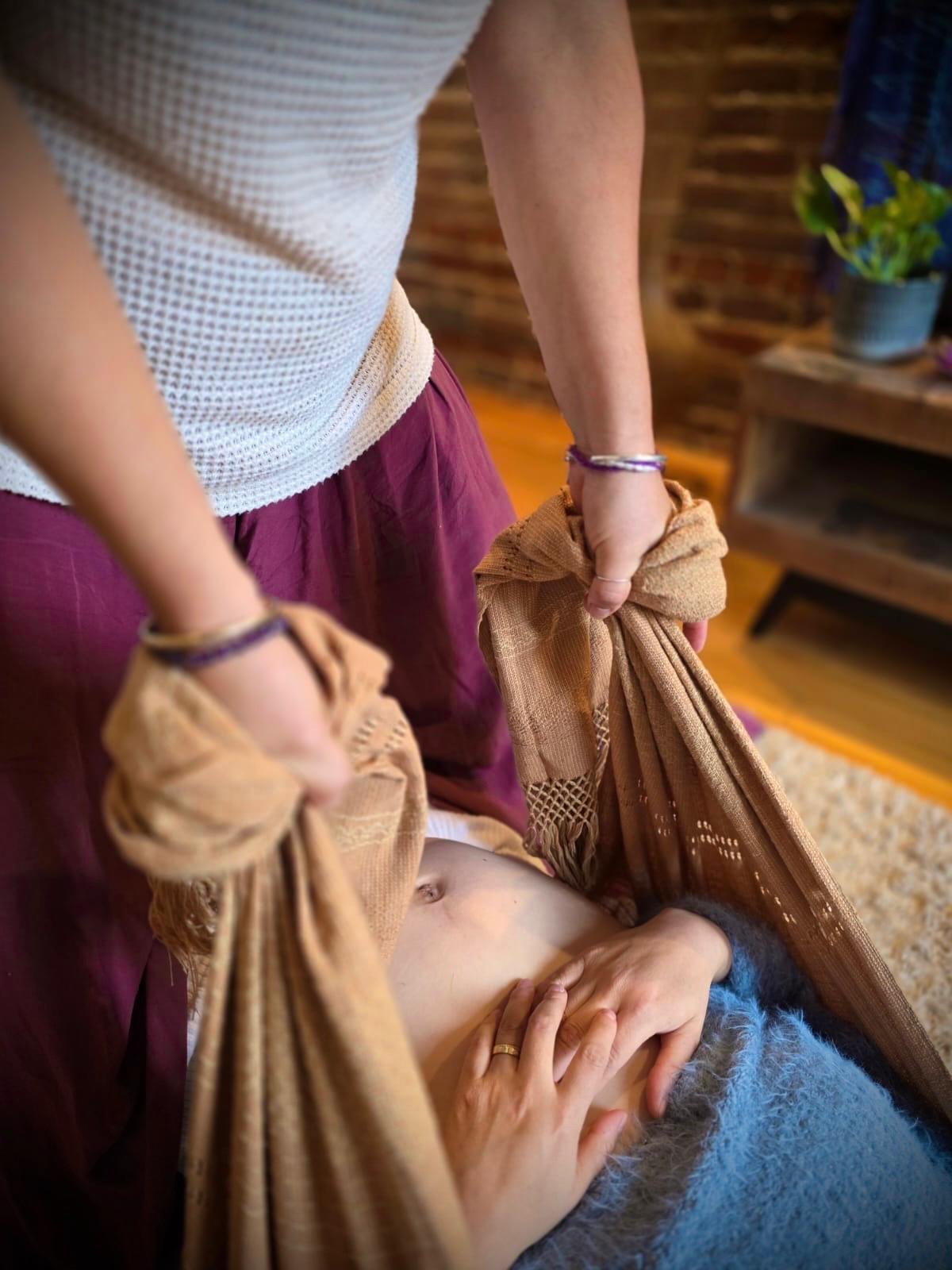
An hour with a rebozo, the woven Mexican shawl, used to gently rock, wrap and support the body. In your home, on Montreal Island. It is the piece of my practice that people are most surprised by, and the one they come back for.
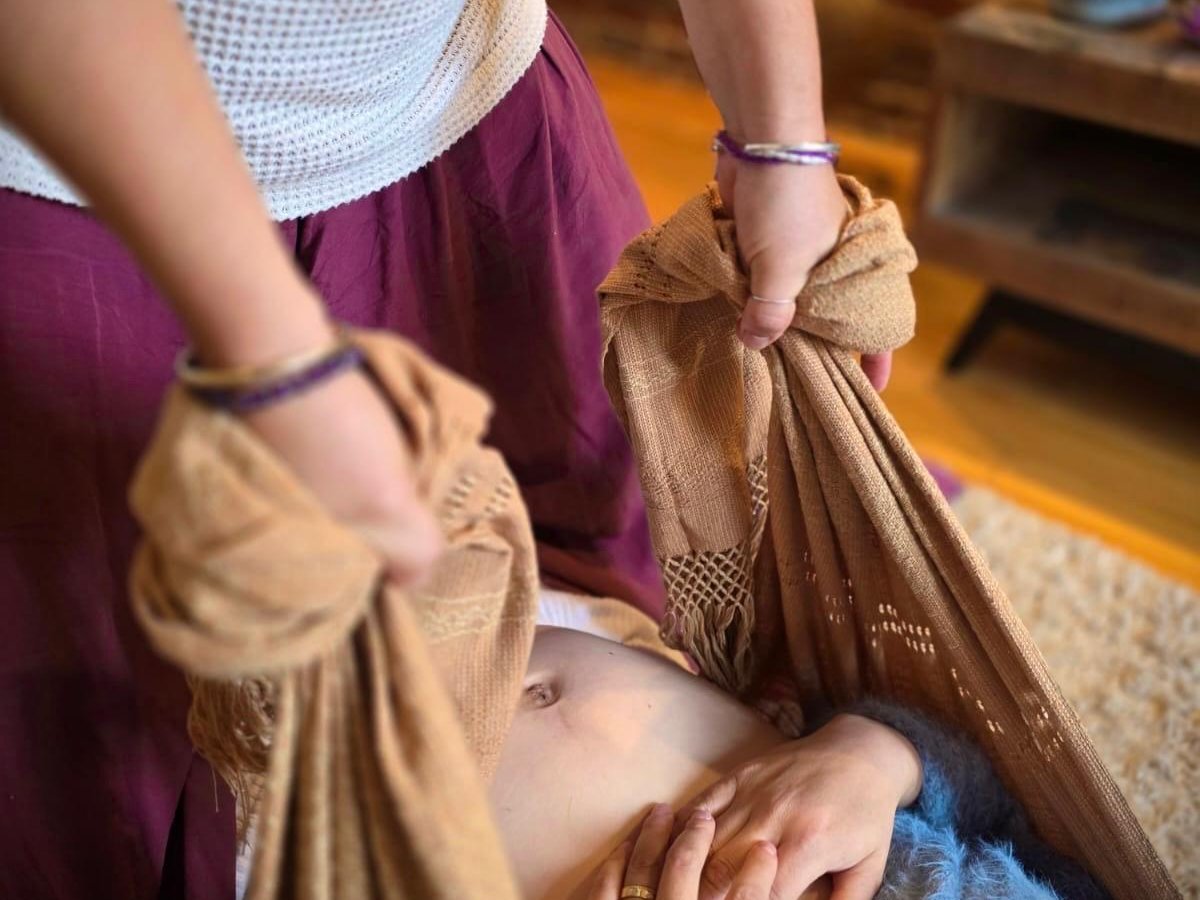
What a rebozo actually is
A traditional Mexican practice. The cloth is passed under the body and rocked, or wrapped firmly and then released. It is slow, rhythmic and repetitive.
During pregnancy
It is meant to ease the hips and the lower back.
During labour
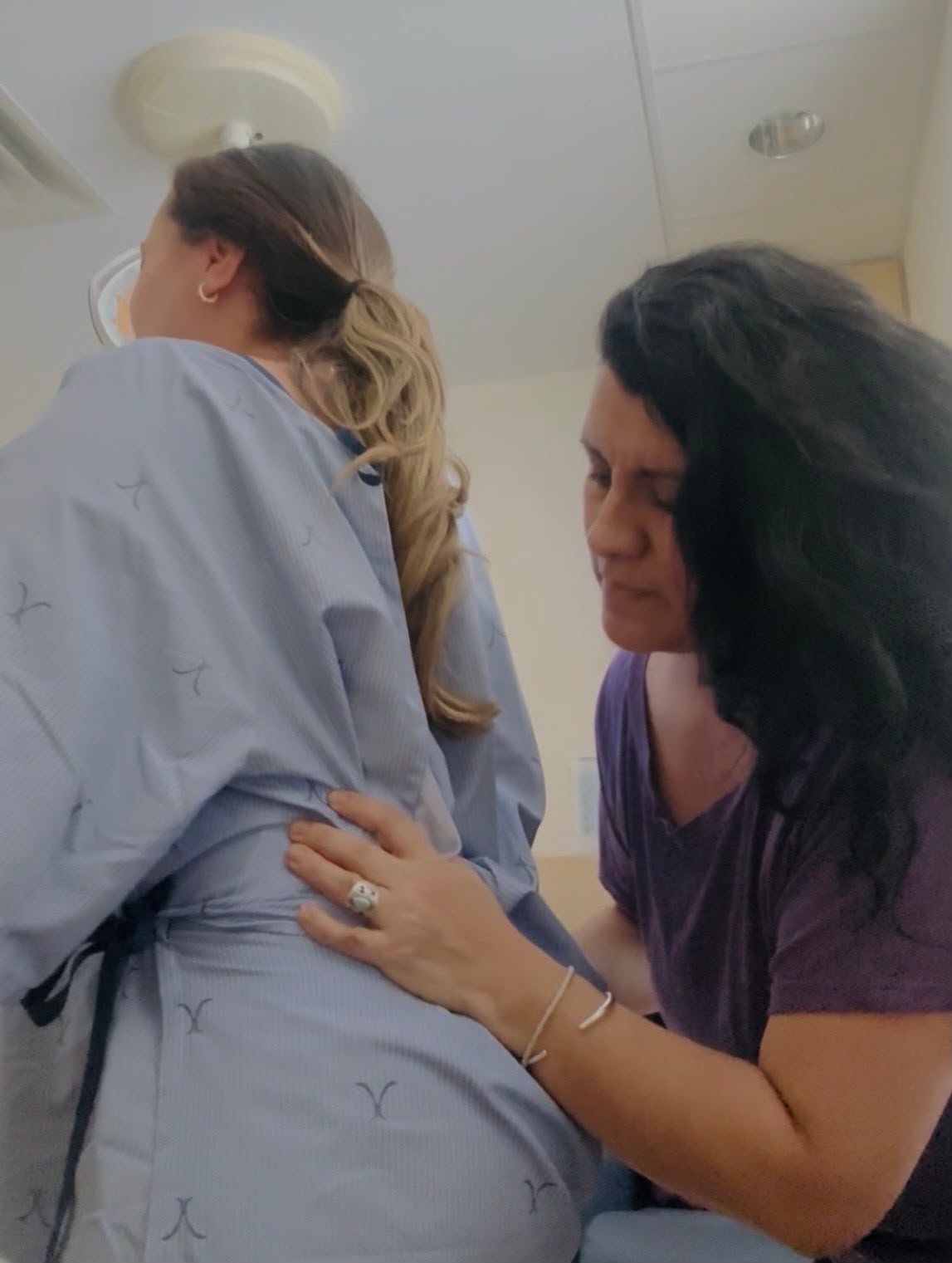
Sifting through a contraction, or the hips held firm while you lean into your partner — one of the things I bring to labour and birth support. It gives the people around you something steady and physical to do with their hands.
After the birth — the closing
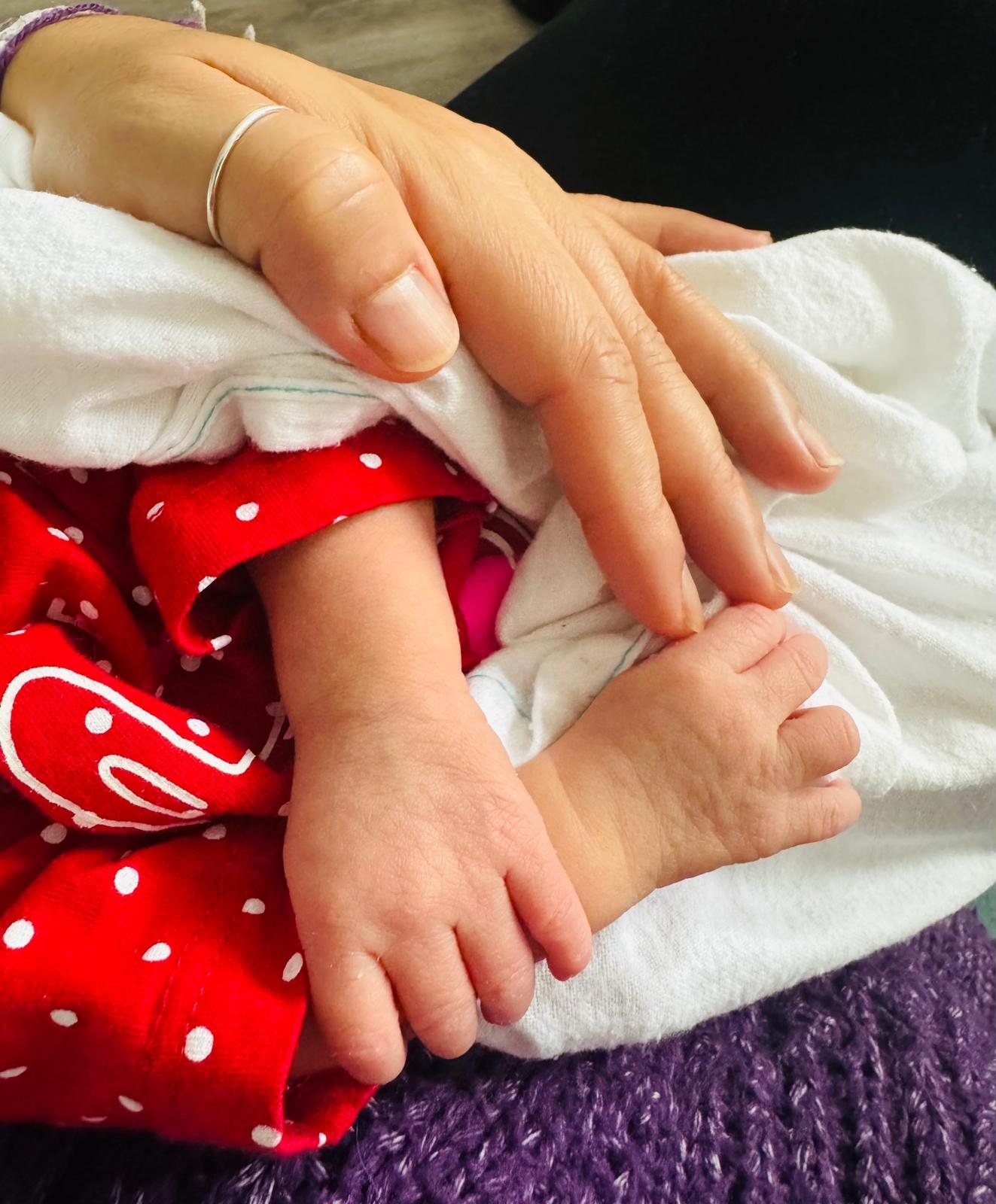
The body is wrapped point by point, head to feet, and released. It is done to mark the end of the birth rather than to treat anything, traditionally somewhere between three and six weeks afterwards.
What it is not
It is not a medical treatment. It will not turn a baby or start labour to order, and I will not tell you otherwise.
Who should check first
It is gentle and it is not a medical treatment, but if you have a pregnancy complication or have been told to limit activity, ask your midwife or doctor before booking. I would rather you checked.
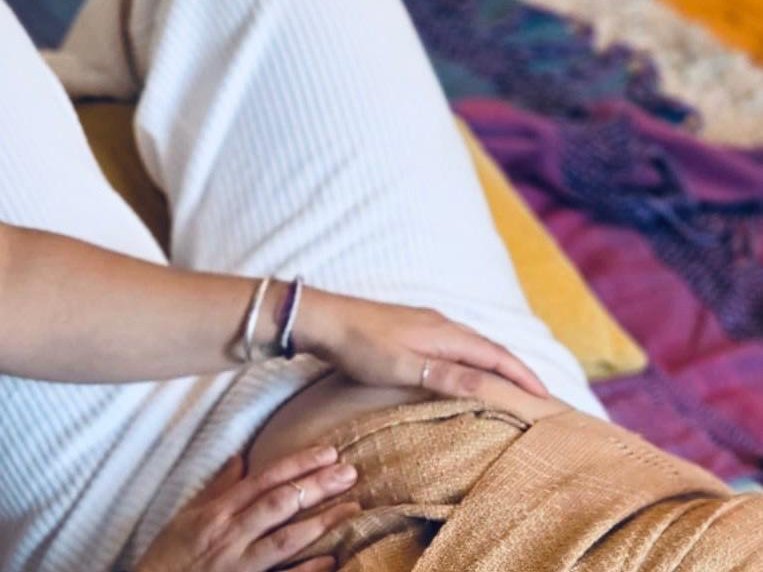
- People carrying the weight low, in the hips and the lower back
- People who want the birth marked and closed, not just recovered from
- Partners who want something useful to do with their hands in labour
- One hour
- In your home
- Montreal Island
- In English or in Spanish
- Added to the package, or booked separately
No. Additional prenatal, postpartum, rebozo and overnight support can also be booked separately, subject to availability.
Traditionally three to six weeks after the birth, though there is no deadline — people book it months later too.
No, and I will not tell you otherwise. The rebozo is used to gently rock, wrap and support the body; it is not a technique for changing a baby's position.
Kind words from the familiesLina has supported
Every review here is from Google. Read any one in full.